Founder, Buckeye Financial LLC
2002 Ohio State BCS National Champion · Author · Problem Solver
From the last line of defense on a national championship team to protecting what people have spent a lifetime building — this is the story of how Lee Boone got here.
Lee Boone was born in Suffolk, Virginia, on November 24, 1981. Six months into the pregnancy, he almost didn't make it. He had a twin sister; his mother lost her, and doctors advised ending the pregnancy entirely. It was his godmother who told her to get a second opinion first. They put her on bed rest instead. Lee is here because of that decision.
He grew up in Hampton Roads — Suffolk, then Portsmouth, then Norfolk — raised by a single mother alongside two brothers and a sister ahead of him. He's the baby by six years, ten years, and fourteen years. His brother Ron goes back that far too — far enough that when Ron later got into pest control, it was Lee who told him it would be a good look for him. Ron took it and ran with it.
Basketball was Lee's life before anything else. He used to sleep with his basketballs. He dreamed about the NBA the way every kid on every court in Hampton Roads did. A woman named Sue Collins made sure he got into camps he couldn't have afforded on his own — camps at George Mason under Paul Westhead — and she helped him get into college too, at a time when he hadn't taken school nearly as seriously as he should have. He remains grateful to her. Rest in peace, Sue.
Lee didn't touch a football until his senior year of high school — a track coach noticed his speed and pulled him onto the team, but the shin splints were more than he could take. College interest was building around track, and scholarships don't grow on trees, so he went out for football instead. He played cornerback, running back, wide receiver, kick returner, and punt returner. He won all-state honors, made the Virginia High School All-Star game, and was invited to the Super 44 — the best of DC, Maryland, and Virginia. From there he went to Fork Union Military Academy, where he kept building — wide receiver, cornerback, both return spots.
Somewhere in that stretch, Lee learned something that has shaped him more than any single game ever did.
"I used to be a people pleaser — willing to do anything to keep people happy around me. What I learned is that too much clutter isn't a good thing. You have to be able to keep visual on what's actually going on around you. People aren't always as interested in you as you think they are — social media gives us a false sense that the whole world is watching. We're here to make a real impact, but if you're doing it so people remember you, that memory lasts a few hours at your funeral before everyone goes back to their lives. I've seen it happen. So I stopped doing things for people expecting something back."
When Ohio State noticed him, every other school seemed to follow right behind. Lee signed as the last freshman to commit during the 2001 signing period — days before fall camp opened, added almost at the last minute to a class that was already set. It remains one of the things he's proudest of. Nobody hands you a spot like that. You have to be worth the risk.

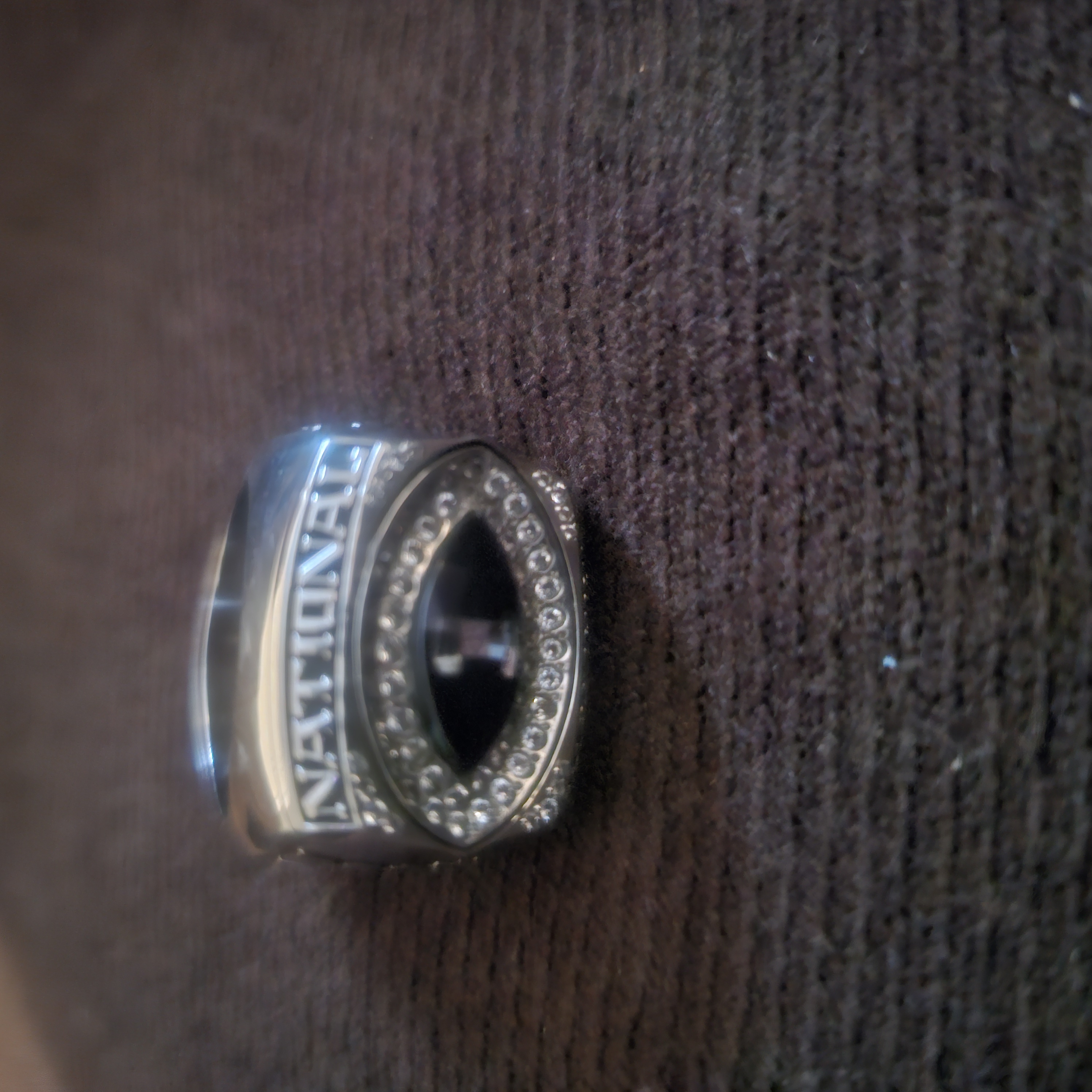
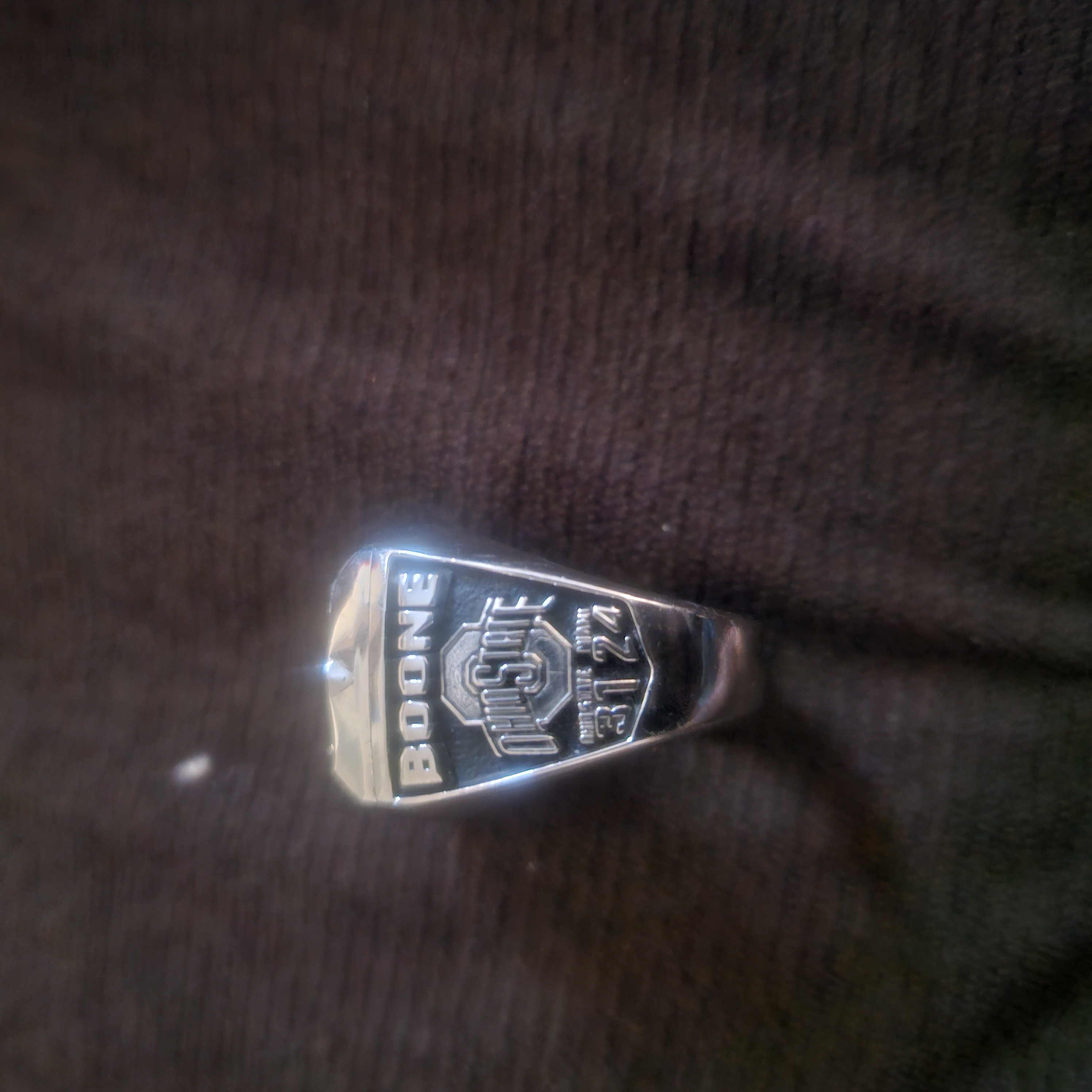
Lee redshirted his first year at Ohio State. His second year — 2002 — he played special teams on the team that beat Miami in triple overtime for the national championship. They called their defense the Silver Bullets. They took real pride in the fact that nobody scored on them. Fourteen and oh that season, seven of those wins by seven points or less.
Lee still has great relationships at Ohio State today. Coach Jim Tressel is very much a father figure to him, and even as busy as Tressel has become — university president, now Lieutenant Governor of Ohio — he still makes time for Lee when it's needed. When Lee asked him to put something in writing about what he was actually building in his players, here's what Coach Tressel sent back, in his own words:
"In football, the last line of defense is the safety. His job isn't just to make tackles — it's to see the whole field, anticipate what's coming, and make sure nothing gets past him that shouldn't. When I coached, I didn't just coach safeties. I tried to make safeties out of every young man who came through our program. Le Andre' Boone was one of those young men. What I always tried to teach our players is that the discipline, the preparation, and the responsibility you develop on the field follows you everywhere — into your marriage, into your business, into how you protect your family. The game ends. The character doesn't. What Le Andre' has built with Buckeye Financial reflects exactly that. He's taken the same principles we talked about in the locker room — protecting what matters, playing with purpose, leaving nothing unguarded — and built a life's work around them. I'm proud of him. And I think you'll find that what he's about to share with you is less about money and more about preparation. Because the best defense isn't reactive. It's built long before the play ever starts." — Coach Jim Tressel
Lee played the exact position the quote is built around — free safety. The last line of defense. It isn't a metaphor he adopted after the fact. It's literally what he was on that field, and it's exactly what "Defense Wins Championships" grew out of.
Boone · Ohio State 31, Miami 24 · 2002 BCS National Championship
There was real fame in that season. People in Ohio treated the Buckeyes better than they treated the Bengals or the Browns. The players didn't have money, but they had more attention than most professional teams in the state. Learning to carry that, at that age, taught Lee things he still uses today.
But it was during that championship season — not after it, during it — that Lee discovered what he actually wanted to do with his life had nothing to do with football at all.
That summer, Lee was working part-time selling magazine subscriptions for a company called Dial America, trying to make extra money. He talked on the phone with a man named Foster Blackman — rest in peace — who worked in insurance. Blackman told him what the power of insurance had done for him, and for the people he'd helped.
"A conviction just fell over me. I can't even fully explain it, but I knew what I wanted to do."
Part of it was practical. During that period, roughly eight players between high school, college, and the pros died from football-related causes. Lee remembered hearing Franco Harris talk about how hard it was for him just to get out of bed some mornings. He didn't want that for himself, or for the family he knew he'd eventually have. He believed he could take care of them with his mind instead of his body.
Lee got his life insurance license first, then his health license, and never really looked back — through every high and low, every up and down, every in and out of the business. He hadn't felt that kind of passion about anything since basketball. Today, he says he's more passionate about this work than he ever was about basketball, and never thought he'd be able to say that.
In 2005, he met the woman who would become his wife. They share the same birthday, exactly one year apart. They married and built a family — three daughters. Merrine comes from a business background, and it was her belief in him that pushed him into the work full-time. Lee was working fifty, sixty hours a week for someone else's company. She looked at that and told him to bet on himself — if he gave himself that same time, what could he build for his own family instead? That was the push he needed. He started out selling health insurance and did well — but he wanted real ownership, not just a good living inside someone else's structure. That's where Buckeye Financial began.
Lee has always been the nosy one — the one his grandmother used to point out, always wanting to know why.
"I never just wanted to eat the pie. I wanted the recipe."
Before Buckeye Financial, Lee worked for another company — one he doesn't name — that was wonderful on the front end. They helped him get off the ground. But the back end told a different story. They took nearly everything from the business once it was built, and when new management came in, they were making more off the sale than the person actually doing the selling.
"The haircut should be small off the top from the big guy, because it's the little guy out there doing the actual work."
Lee leaned on the relationships he'd already built — customers who trusted him enough to follow him into whatever came next — and told them exactly what he was building. That trust is what let him stand on his own two feet.
Much of his early business was health insurance, cross-offering other things when it genuinely made sense for the client. But that part of the industry was largely unregulated at the time, and like anything unregulated, there were good apples and bad apples. Watching some of the practices out there — things that weren't ethical, people he didn't want to be associated with — is what pushed Lee to reevaluate everything and build something of his own, on his own terms.
Lee founded Buckeye Financial LLC in October 2019, and hasn't looked back since.
Here's what separates how he practices from a lot of agents in the industry: the market is saturated with people focused purely on accumulation. That has its place — Lee isn't against it. But almost nobody is talking about protecting what people have already earned. He saw the gap. People get into retirement and become vulnerable to things that, if somebody had simply warned them in advance, they could have addressed. That's the niche he found, and the one he's built his entire practice around.
It isn't that accumulation and protection are opposites. It's that there has to be harmony — balance — between them, based on a person's actual goals and actual circumstances. When someone is only accumulating, without knowing how much of their portfolio needs protection given their specific situation, that's exactly when people get caught badly exposed.
"What's the point of building something for forty years if you can lose a meaningful piece of it in a single moment — in the twinkling of an eye?"
Family is business to Lee, and he loves his business — so does his wife, and so do his children, even at their young ages. They understand this is an ecosystem, and they don't let outside influences pull them away from it. They keep the main thing the main thing.
What Lee loves most about Merrine is that she knows a sentence he's thinking before he ever says it out loud. They're that integrated with each other. She's not just his wife — she's a set of eyes and ears in places he can't always see or hear himself. She is his backbone and his rock, strong in exactly the ways he needs her to be, precisely when he needs it.
They have three daughters, and each is genuinely her own person. The oldest is protective and watchful over everyone. The middle child is sweet and motherly, caring toward everyone around her. The youngest — you truly never know what you're going to get with her. They're so much alike, and so completely different, and Lee says he needs every bit of that variety in his life.
The family is affectionate with each other, attentive to each other's needs and desires. They run on an honor system — nothing is simply given, everything is earned — but they stay consistent with one another, understanding that what happens to one of them ripples out and touches all of them in some way.
"Find people who actually believe in you, who are genuinely interested in you — and choose from that pool, and only that pool. Anything outside of it, you inherit unnecessaries you didn't need to carry."
The world twenty years from now won't look like it does today — maybe even sooner than that. Technology keeps moving, and some of what people do right now won't just be optional tomorrow — there may be no need for it at all. Lee believes we have to think that way now, individually and collectively, building real ecosystems for ourselves and for our children, because the fundamentals never change: everybody still needs food, water, and shelter. The human touch will likely be the last thing to change, if it ever does — but everything around it still has to adapt, because what mattered yesterday doesn't automatically matter tomorrow.
The legacy Lee is building is this: he wants to protect as many people as possible from demises that are completely avoidable — the kind where a simple lack of knowledge is the only reason someone gets hurt. When you're informed, the responsibility shifts to you to make a sound decision. Lee doesn't like forcing anyone into a choice. He'd rather put what's coming down the road directly in front of their face, because most people never see a problem until it's already on their doorstep.
"Objects in the mirror are closer than they appear. Just because something looks far off, or you can't see it at all yet, doesn't mean it won't reach you fast."
Lee takes people who feel like there's no real strategy to get where they're trying to go, and shows them not only that it's achievable, but exactly how — customized to who they are, where they are, when, why, and how. He doesn't think of himself as a retirement specialist so much as a problem solver. These are real problems — taxes, penalties, exposures that agents focused purely on accumulation have no incentive to ever mention. That's where he comes in.
"I look at the waters I swim in, and they're not infested with sharks. Wherever you're headed in life, find the blue water, not the red water. The red water is full of people who'll do anything to make a kill. You can survive there if you have to — but find your actual niche, and give yourself fully to it. Protection is mine."
The legacy Lee leaves for his family isn't a number. It's the ability to keep the relationships they've built, the trust people place in them because they know — without question — that Buckeye Financial has their best interests at heart.
No obligation. Lee reviews every submission personally.